
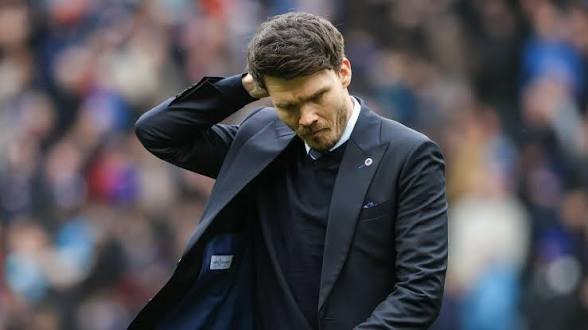
Broken Trust at Ibrox: The Danny Rohl Saga and Rangers’ Controversial Call
In a move that has sent shockwaves through the football community, Rangers FC’s reported decision to pressure manager Danny Rohl into re-signing under controversial circumstances has ignited fierce debate about trust, leadership, and the direction of the club. What should have been a period of stability and long-term planning has instead turned into a storm of uncertainty, raising serious questions about how the club is being run behind the scenes.
Danny Rohl, widely regarded as a progressive and tactically sharp coach, had been seen by many fans as a figure capable of guiding Rangers into a new era. His methods, built on discipline, modern football philosophy, and player development, had begun to show promise. While results may not yet have reached their peak, there was a growing sense that the foundations for future success were being laid. That is why recent reports suggesting internal conflict and pressure from management have come as such a surprise.
At the heart of the controversy lies an alleged breakdown in communication between Rohl and the club’s hierarchy. Sources indicate that disagreements over transfer policies, control of football operations, and long-term strategy created tension behind closed doors. Instead of resolving these issues transparently, the situation appears to have escalated into a power struggle. Asking—or pressuring—a manager to recommit under unresolved disputes risks damaging not only the individual relationship but also the broader integrity of the club.
For supporters, this episode feels like a violation of trust. Fans invest emotionally in both the team and its leadership, expecting unity and clarity of purpose. When internal conflicts spill into the public domain, it undermines confidence and creates instability. The optics of the situation are particularly troubling: a promising manager caught in a web of controversy, and a leadership group seemingly unable to present a cohesive vision.
From a footballing perspective, such instability can have real consequences. Players are quick to sense uncertainty, and dressing room morale can suffer when leadership appears fractured. Recruitment becomes more complicated, as potential signings may hesitate to join a club where the manager’s authority is in question. Even ongoing tactical progress can stall if the manager is distracted by off-field tensions.
There is also a broader lesson here about modern football governance. Clubs today are not just sporting institutions—they are complex organizations requiring clear structures and mutual respect between executives and coaching staff. Successful teams often thrive on alignment: a shared philosophy that runs from the boardroom to the pitch. When that alignment breaks down, even the most talented individuals can struggle to succeed.
For Rangers, the path forward will require more than just damage control. Rebuilding trust—both internally and with supporters—must be the priority. That means honest communication, a clearly defined structure of responsibilities, and a commitment to long-term stability over short-term optics. Whether Danny Rohl remains at the helm or not, the club must demonstrate that it has learned from this episode.
In football, results matter—but so does how those results are pursued. The Rangers situation serves as a reminder that trust, once broken, is difficult to restore. How the club responds now will define not just the immediate future, but its reputation for years to come.
