
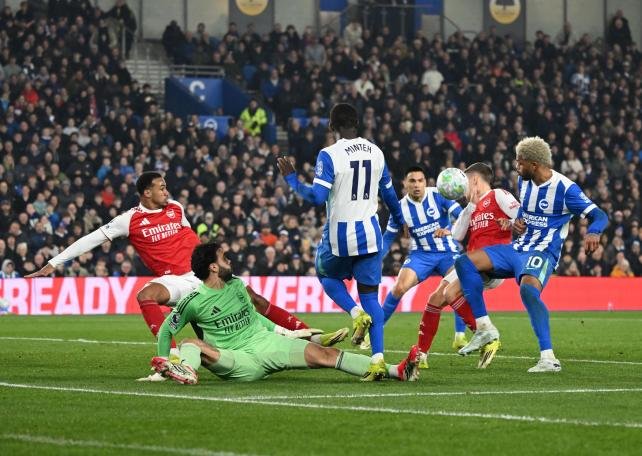
Brighton Must Be Calm and Clinical: What the Arsenal Game Revealed
Brighton’s clash with Arsenal offered more than just another entry on the fixture list—it exposed an important lesson about the identity Brighton must embrace if they want to compete consistently at the highest level. The match highlighted a simple but powerful truth: Brighton must be calm, composed, and clinical in the decisive moments of the game.
Brighton have earned widespread admiration in recent seasons for their attractive style of football. Their commitment to possession, intelligent build-up play, and tactical flexibility has made them one of the most entertaining sides in the Premier League. However, beautiful football alone is rarely enough when facing elite teams. Matches against top opposition often come down to a few key moments—moments that demand precision, composure, and ruthless finishing.
The Arsenal game was a clear demonstration of this reality.
For large spells of the match, Brighton were competitive. They moved the ball well, pressed intelligently, and showed flashes of the technical quality that has become their trademark. Yet when opportunities appeared in the final third, the difference between Brighton and a title-challenging side like Arsenal became evident. Arsenal were decisive; Brighton were not.
Clinical teams punish mistakes and convert chances without hesitation. Arsenal did exactly that. Their attacking players showed calmness in front of goal, turning half-chances into genuine threats and capitalizing on defensive lapses. Brighton, on the other hand, struggled to translate promising build-up play into tangible results. The final pass lacked sharpness, the finishing lacked conviction, and the moments that could have shifted the momentum slipped away.
This is where the importance of composure becomes crucial.
Calmness in football is not just about slowing the game down—it is about maintaining clarity when the pressure is highest. It is about choosing the right pass instead of the flashy one, taking a controlled touch rather than rushing the shot, and trusting the system even when the match becomes chaotic. Against Arsenal, Brighton sometimes looked hurried in these decisive phases.
Being clinical is equally important. At the highest level, teams rarely get endless opportunities. One clear chance can define an entire match. Brighton must develop the mentality that when such chances arrive, they must be taken.
This does not mean Brighton need to abandon their philosophy. Their identity—intelligent, progressive football—has brought them success and recognition. What needs refinement is the final step. Possession must lead to penetration, and penetration must lead to goals.
The Arsenal match should therefore be seen less as a setback and more as a lesson. It highlighted the gap that still exists between a talented, well-coached side and a team capable of consistently challenging the league’s best. Closing that gap will require maturity, patience, and sharper execution in front of goal.
Brighton have the structure, the coaching, and the talent to reach that level. What they must add is the calmness to control big moments and the clinical edge to finish them.
If they can combine their attractive football with ruthless efficiency, Brighton will not just compete with the Premier League’s elite—they will begin to defeat them regularly.
