
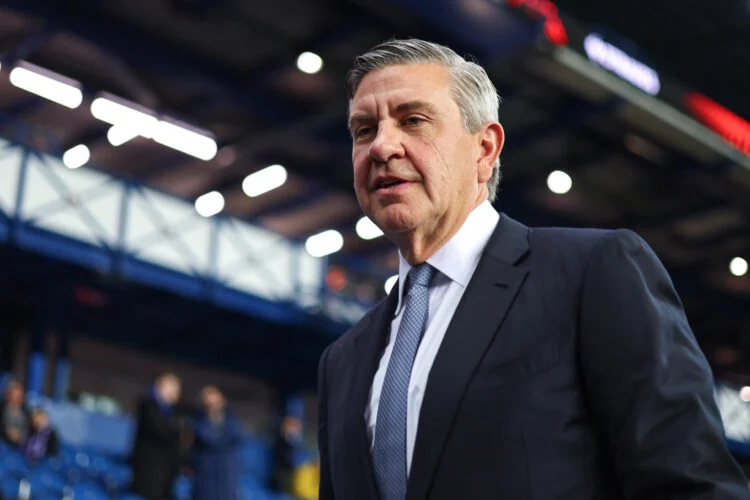
Rangers F.C. Move Toward New Era as Andrew Cavenagh’s Influence Grows
A significant shift appears to be underway in the boardroom at Rangers, with growing indications that Paraag Marathe’s role at Ibrox could be set to change as Andrew Cavenagh deepens his involvement with the Glasgow giants. While no formal announcement has yet been made, multiple signals suggest the club’s leadership structure is being reassessed amid evolving strategic priorities.
Marathe, long respected for his commercial acumen and global sports connections, has played a visible role in shaping Rangers’ off-field ambitions. His influence was seen as part of a broader strategy to modernise operations, strengthen international partnerships, and position the club competitively both domestically and in European competition. However, football governance is rarely static, and Rangers’ hierarchy appears ready to recalibrate as fresh investment perspectives emerge.
Enter Andrew Cavenagh. The American investor’s increasing presence around key discussions has sparked widespread speculation that he is poised to assume a more central leadership position. Known for his background in finance and long-term growth strategies, Cavenagh is believed to favour a streamlined decision-making model, with sharper alignment between financial planning and football operations.
Sources close to the club suggest that the move is less about dissatisfaction and more about strategic evolution. Rangers’ board recognises the necessity of adapting to the modern football landscape — one shaped by rising player valuations, expanding global fanbases, and intense competition for commercial revenue. Cavenagh’s experience in scaling enterprises and navigating complex investment environments could prove vital as the club seeks sustainable growth.
At the same time, the potential transition reflects Rangers’ desire for stability and clarity at the top. The Scottish Premiership landscape remains fiercely competitive, and European qualification campaigns demand both financial prudence and calculated risk-taking. Aligning leadership around a unified long-term blueprint may be viewed as essential to maintaining momentum on and off the pitch.
If Marathe does step aside or shift into a revised capacity, it would mark the end of a notable chapter. His tenure symbolised Rangers’ attempt to broaden their strategic horizons and integrate international best practices into club operations. Yet football’s cyclical nature often demands fresh voices at pivotal junctures, particularly when investment structures evolve.
For supporters, the priority remains simple: progress. Fans are less concerned with boardroom titles than with visible results — competitive squads, smart recruitment, infrastructure improvements, and consistent performances in Europe. Any leadership reshuffle will ultimately be judged by whether it strengthens Rangers’ pursuit of silverware and financial resilience.
Cavenagh’s rising involvement could signal a more assertive investment phase, potentially unlocking new funding streams or restructuring existing frameworks. It may also bring a refined governance approach aimed at transparency and accountability — factors increasingly scrutinised in modern football ownership models.
Until formal confirmation arrives, speculation will continue. What is clear, however, is that Rangers stand at a crossroads. The decisions made in the coming weeks could shape the club’s trajectory for years to come. Whether through a complete leadership handover or a redefined executive structure, the board appears determined to position Rangers for a new chapter — one built on ambition, calculated growth, and renewed focus at the highest level of the game.
