
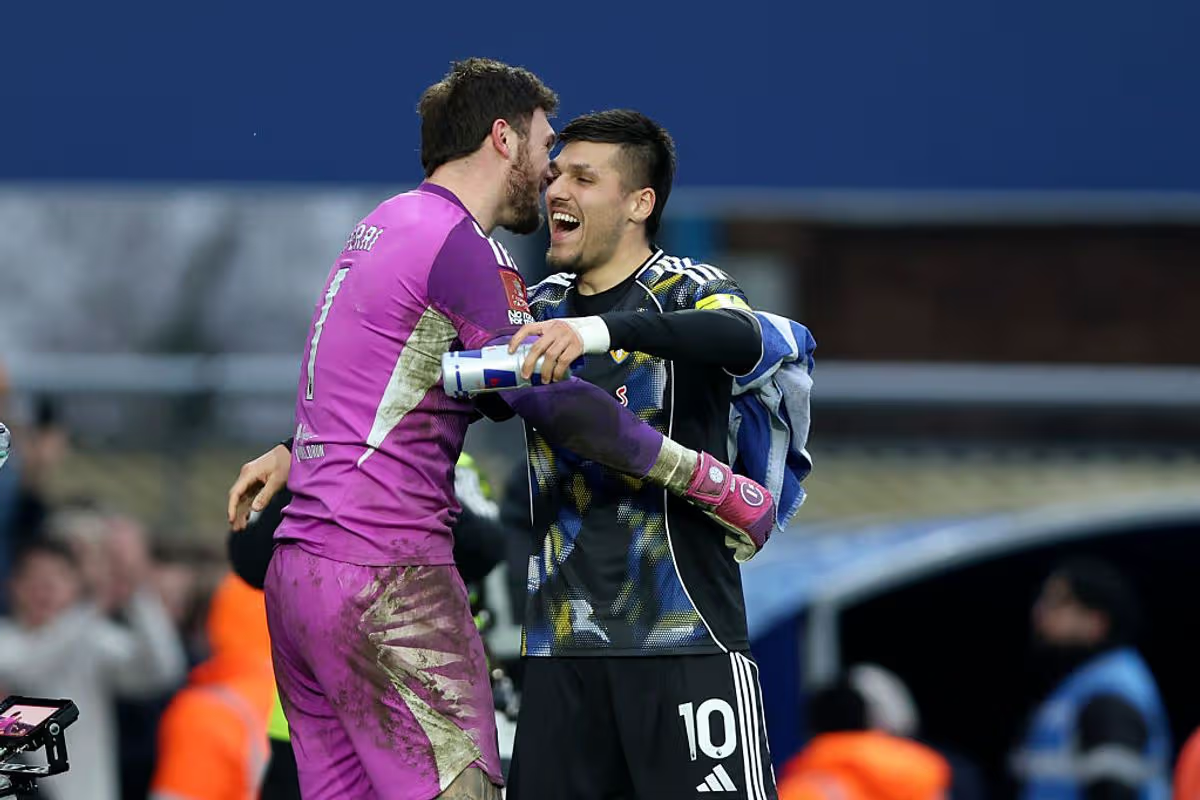
Blood and Thunder at St Andrew’s: Birmingham City vs Leeds United Proves the FA Cup Still Has Its Magic
On a raucous afternoon at St Andrew’s, the old ground shook, roared and crackled with the kind of raw electricity that only the FA Cup can summon. When Birmingham City locked horns with Leeds United, it was never going to be a polite exchange of passes and patterns. It was blood and thunder, full-blooded tackles and flying tempers — and a vivid reminder that the romance of the FA Cup is alive and well.
From the first whistle, there was an edge. Birmingham, cast in the familiar role of underdog, played as if every challenge carried the weight of history. Leeds, with their proud pedigree and expectation, tried to impose order. But the Cup has never cared much for hierarchy. It feeds on chaos, on noise, on moments that tilt the balance of belief.
The tackles flew in early — fair, fierce and uncompromising. Midfield became a battlefield. Every second ball was contested as if it were the last. When a Birmingham defender launched into a sliding block that brought the crowd to its feet, it felt like a goal in itself. The roar rolled around St Andrew’s, a visceral surge of defiance and hope.
Leeds responded in kind. Their attacking thrusts were sharp and purposeful, stretching the home side and silencing the stands in anxious bursts. A curling effort that skimmed the crossbar drew gasps; a last-ditch clearance on the line preserved parity and sanity in equal measure. This was not a chess match. It was trench warfare with football boots.
What made it special was not just the intensity but the jeopardy. League form and tactical systems seemed secondary to desire. Birmingham chased lost causes, harried defenders and threw bodies into challenges. Leeds showed flashes of class, slick combinations cutting through the noise. Yet every time the visitors threatened to settle the tie, the home crowd dragged their team back into it.
There were confrontations, of course. Fingers pointed. Players squared up. The referee’s notebook filled quickly. But even that felt part of the theatre. The FA Cup has always thrived on friction — the collision of ambition and desperation, of giant and supposed minnow.
As the game wore on, legs tired but commitment did not. Substitutes entered to fresh waves of noise. Each clearance was cheered, each corner greeted like a turning point in history. It was football stripped to its emotional core — no VAR debates dominating the narrative, no sterile atmosphere, just raw competition and community.
In an era when the modern game can sometimes feel distant and corporate, this tie was refreshingly primal. It showed why generations still cling to the Cup’s allure. For Birmingham, it was a chance to write a chapter of defiance. For Leeds, it was a test of nerve and character. For everyone watching, it was proof that the oldest domestic cup competition in the world still has the power to quicken the pulse.
The final whistle, whenever it came, would not diminish what had unfolded. Because this was more than a result. It was a spectacle of sweat and spirit, a reminder that somewhere between the crunching tackles and the soaring noise, the magic never truly left.
