
Rooney’s Withering Verdict: “Something Has to Give at West Ham”
On a turbulent weekend for West Ham United, former England striker and pundit Wayne Rooney delivered a scathing appraisal of the club’s defensive frailties on Match of the Day — and made no attempt to soften the implications for the club’s wider crisis.
When presenter Kelly Cates observed that West Ham have already conceded seven goals from corners this season, Rooney replied bluntly:
“They’ve been really poor from set-pieces, and conceding seven goals already this season is too many.” (West Ham Zone)
He broke down the first goal in their 2-1 home defeat to Crystal Palace:
“It’s a 3 v 2 by the penalty area … Guehi gets free; it’s a completely free header … Mateta is on the goalkeeper; no one is marking him. Mavropanos, instead of going back to get Mateta, goes on the goal line, and then that’s too late …” (West Ham Zone)
Rooney didn’t spare West Ham’s defence — and by extension, their leadership:
“They cannot defend from set-pieces, and other teams have started to target them from these situations.” (West Ham Zone)
Beyond the Goals: Protests, Ownership & Frustration
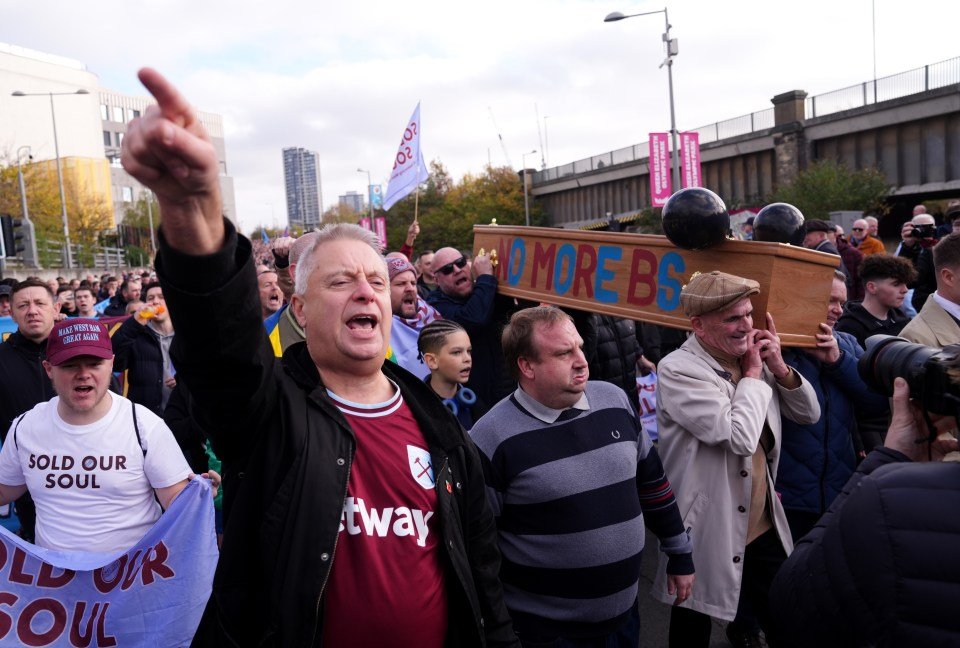
But the breakdown of their performances on the pitch is now intertwined with turmoil off it. West Ham supporters have staged repeated protests against the club’s ownership — led by David Sullivan and vice-chair Karren Brady — citing poor results, lack of ambition and a perceived disconnect. (West Ham Zone)
Cates reported live on Match of the Day what club officials had told her about the scale of a recent protest:
“The club say about 2,000-3,000 fans were protesting before the game …” (Hammers News)
But independent estimates put the turnout at closer to 10,000. (Hammers News)
The discrepancy has only stoked frustration among the fanbase, who feel both unheard and misrepresented. Rooney’s critique of the team now resonates against a backdrop of wider instability — implying that the defence of set-pieces is simply a symptom of something far more deep-rooted.
“The Warning Lights Are Flashing”
For Rooney, the issue is not isolated to mistakes on corners. It signals that West Ham are failing to secure even the basic foundations of a competitive team. With their defence leaking goals and their home form shattered, every setback adds fuel to the protests.
He argued that the club’s problems stem from a lack of coherent structure and identity:
“It takes time to then get players out, get players in and then, before you know it, that manager doesn’t get the results and then they’re gone and you’re back to square one.” (on what makes West Ham a concern) (Hammers News)
Translated from his perspective: steady leadership, clear philosophy and organisational clarity are missing. And without them, even the most capable manager is fighting an uphill battle.
The Reality Now
- West Ham conceded 13 goals in just three home matches this season. (West Ham Zone)
- The protest movement is showing no signs of abating — large marches, symbolic coffins, and a club that appears defensive rather than constructive. (Hammers News)
- Rooney’s verdict: “Too many times have West Ham seen the same failures.” (West Ham Zone)
In short: the cracks aren’t only on display in the third-minute header, the missed mark or the slow reaction. They’re structural. Rooney’s analysis implies the team’s problems are systemic and that the off-field unrest is connected — not incidental.
What Needs to Happen
If West Ham are to stabilise:
- Fix defensive fundamentals. Set-piece conceding must be addressed immediately.
- Establish clarity. The hierarchy must outline a coherent vision — both for recruitment and club identity — that players, fans and pundits can recognise.
- Reconnect with the fanbase. Ignoring a 10,000-strong protest may be technically possible — but risking alienation of the supporters threatens the very fabric of the club’s support.
Conclusion
Wayne Rooney didn’t mince words on Match of the Day. His critique of West Ham’s defending may have been focused on corners, but his message was much broader: a warning that unless urgent, sweeping change occurs — both on and off the pitch — the club’s slide may continue. And in the meantime the tension between players, fans and owners looks set to escalate.
