
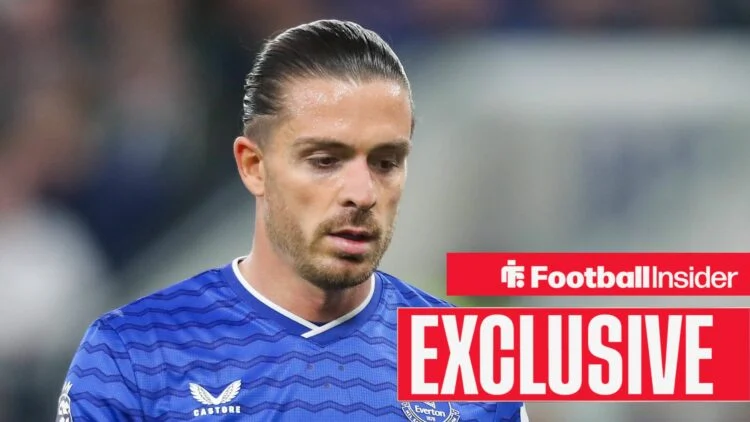
Why Everton’s Insurance Pay-Out Won’t Fully Cushion the Grealish Blow – Keith Wyness Slams Compensation Deal
Everton’s recent injury setback involving winger Jack Grealish has brought into sharp focus not just the sporting implications but also the financial fallout for the club — and former Everton chief executive Keith Wyness hasn’t held back in his assessment. Speaking exclusively to Football Insider after Grealish was ruled out for the rest of the season with a stress fracture in his foot, Wyness has criticised how much insurance money Everton will actually receive, describing the arrangement as far from a cushion for the Toffees’ coffers. (Football Insider)
Grealish’s injury, confirmed by club manager David Moyes to likely require surgery and sideline him until the end of the campaign, represents a serious blow for Everton on several fronts. Not only has the 30-year-old been one of their most creative players this season, but the financial investment wrapped up in his loan deal from Manchester City also poses a complex challenge given the club’s current economic constraints. (Football Insider)
In his comments, Wyness made it clear that while insurance will play a role in offsetting some of Everton’s costs, it will fall well short of full coverage. He explained that insurance typically reimburses only a percentage of a player’s wages, not the complete amount, meaning Everton will still be left carrying a “significant amount” of financial burden until the end of the season. For a player of Grealish’s calibre — whose wages are reportedly a substantial sum courtesy of his Man City contract and the terms of the loan — that shortfall could be considerable. (Football Insider)
Wyness emphasised that there are “really no winners in this whole situation,” pointing out that clubs often find themselves in a bind with insurance policies that don’t cover full wage commitments. Everton, for their part, agreed to take on a large portion of Grealish’s pay as part of the loan agreement in the first place, which was intended to boost their attack and possibly set up a permanent transfer next summer. But with Grealish’s season now effectively over, those plans are in jeopardy and the wage outlay becomes an unavoidable cost regardless of his playing status. (Football Insider)
The backlash from Wyness underscores a broader issue affecting many clubs that take on high-earning players on loan: insurance rarely compensates for the full financial risk, especially when the player’s wages are heavily subsidised by the borrowing club. While insurance might soften the blow, Wyness’ assessment suggests Everton are likely to absorb a substantial proportion of the cost themselves — a bitter pill given the club’s ongoing financial restraint. (Football Insider)
Adding to Everton’s pressing concerns, Grealish’s injury also casts doubt over the feasibility of activating a £50 million option to make his deal permanent next summer, as previously reported. That potential transfer now looks unlikely, particularly with his contract at Manchester City approaching its final year and with other clubs reluctant to invest such sums in a 30-year-old coming off a major injury. (Sports Mole)
In response to the immediate squad impact, Everton have moved to bring in attacking reinforcement, with young forward Tyrique George arriving on loan from Chelsea to help plug the gap in creativity and attacking depth left by Grealish’s absence. (Football Insider)
Ultimately, Wyness’ critique highlights that in football’s modern financial landscape, insurance is rarely a complete safety net, especially for clubs already balancing tight budgets and ambitious sporting goals. Everton’s predicament serves as a stark reminder that even high-profile loan signings carry multi-layered risks — and when injuries occur, the economic consequences can be as punishing as the sporting ones. (Football Insider)
